Algeria Ratifies Niger Deployment to Guard Oil Assets
The lower house voted Sunday to authorize ground troops for the first time since 1973, citing the need to protect Sonatrach facilities.
By Oliver Collins ·
Algerian lawmakers voted on Sunday to authorize the deployment of ground forces to neighboring Niger, ending a decades long policy of military noninterference. The People's National Assembly ratified the plan after the upper house, the Council of the Nation, unanimously endorsed the proposal earlier that day.
The move is designed to protect state owned energy assets in the Sahel region. The Associated Press reported that the troops will specifically guard oil facilities owned by Sonatrach, Algeria's state owned energy company. Senator Belkacem Boulghiti told reporters that the mission is to secure economic infrastructure rather than wage war.
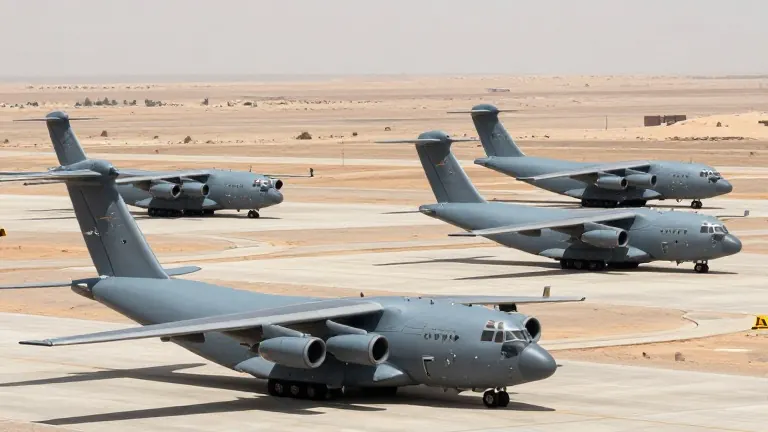
Officials have not yet announced the size of the contingent or the specific start date for the deployment. The vote follows a preliminary step taken nearly two months ago, when Algiers dispatched four Russian made Sukhoi Su-30 jets, a transport plane, and an aerial refueling aircraft to Niamey. Authorities described that earlier move as a reaction to attempts to destabilize Niger's military led government.
The constitutional basis for the mission is Article 91, which allows the president to authorize overseas deployments with the support of at least two thirds of members in each parliamentary chamber. This marks a rare exception to Algeria's traditional foreign policy, which has avoided foreign entanglements since the 1973 Arab-Israeli war.
The decision comes as Algiers seeks to stabilize its borders amid regional upheaval. Mali, Burkina Faso, and Niger have experienced six military coups since 2012. France withdrew its troops from the region between 2022 and 2023, creating a security vacuum. Approximately 100 Russian personnel linked to Africa Corps arrived in Niamey in April 2024 to provide equipment and training.
Algeria remains the largest military spender in Africa, with the Stockholm International Peace Research Institute recording over $25 billion in defense expenditures for 2025. The deployment also aims to safeguard the planned Trans-Saharan Gas Pipeline, a project that would transport Nigerian gas to Europe through Niger and Algeria.
Diplomatic relations between the two nations had been strained following the 2023 coup in Niger. Tensions intensified last April when the Algerian army shot down a Malian drone, prompting Niger, Mali, and Burkina Faso to recall their ambassadors. President Abdourahamane Tchiani visited Algiers in February, and his defense minister, Salifou Mody, held security talks there later in the year.
Source: Al Jazeera